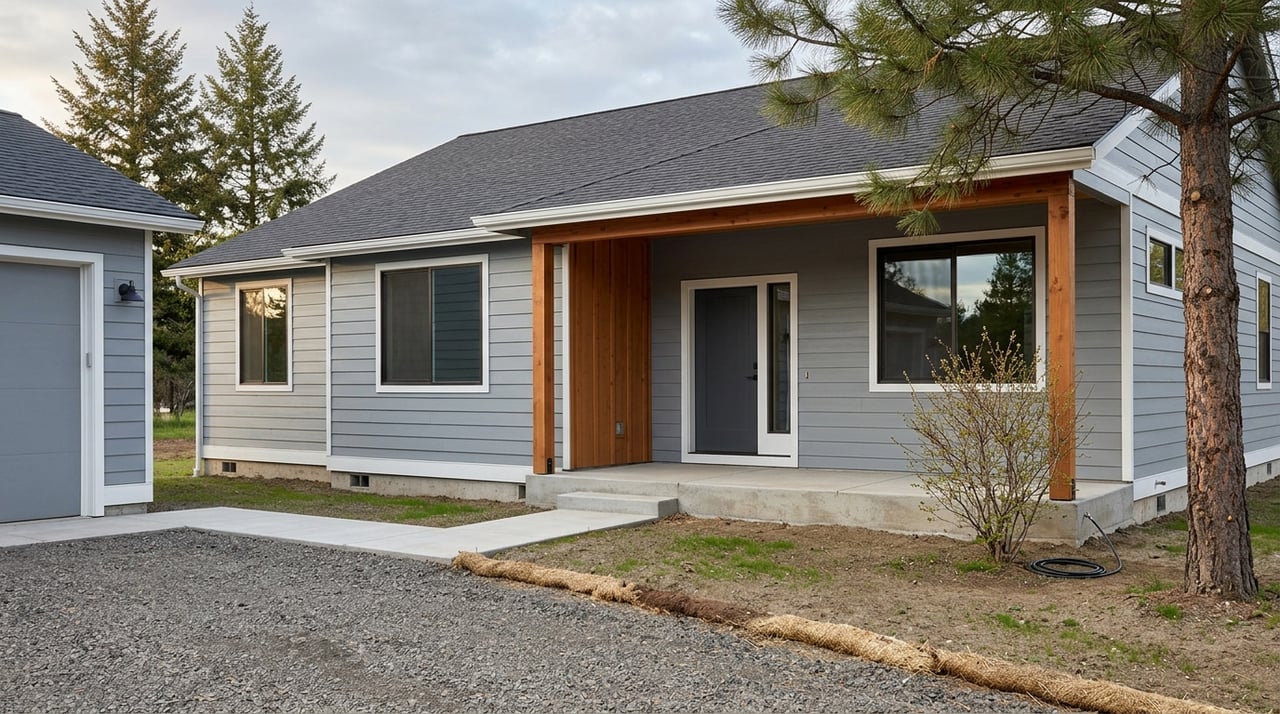
If you want easier access to both Spokane and Coeur d’Alene without giving up parks, river access, and a strong local feel, Post Falls deserves a closer look. Many buyers are trying to find that middle ground where daily life feels convenient, housing options are varied, and weekends still feel like a getaway. The good news is that Post Falls offers a practical location along with a lifestyle that stands on its own. Let’s dive in.
Why Post Falls draws attention
Post Falls sits in a sweet spot along the Spokane to Coeur d’Alene corridor. It gives you direct access to I-90 and SH-41, which are the main transportation links for getting around the area. That central location is a big reason more buyers are taking a serious look here.
The city is also growing quickly. Census estimates put Post Falls at 46,715 residents in July 2025, which is a 21% increase since 2020. At the same time, the average travel time to work is 24.1 minutes, which helps show why the city works well for people balancing jobs, errands, and recreation across the region.
Commuting from Post Falls
For many buyers, the biggest advantage of Post Falls is flexibility. You are not choosing between a Spokane lifestyle and a Coeur d’Alene lifestyle quite as sharply here. Instead, you are living in a place that can connect you to both.
The city recently adopted a Transportation Master Plan through 2045, and the Idaho Transportation Department is reconstructing the I-90/SH-41 interchange to improve safety, capacity, and connectivity. Those updates matter because they reflect how important this corridor has become for everyday travel. If you expect to move around the region often, that is a meaningful part of the picture.
If you prefer to have more than one transportation option, Post Falls is also within Kootenai County’s Citylink service area. That means there is at least a local bus option in addition to driving. For some households, that added flexibility can be a real plus.
Outdoor life feels built in
Post Falls is not just a stop between larger cities. One of its strongest selling points is how easy it is to work outdoor time into a normal week. The city reports 36 parks, more than 900 acres of park land, and 38 miles of trails.
That kind of park system shapes everyday life. It gives you more options for walks, playground time, river views, trail access, and low-key weekend plans close to home. If you want a place that feels active without feeling overly urban, Post Falls checks that box.
Q’emiln Park and river access
Q’emiln Park is one of the city’s standout outdoor spaces. The city describes it as a 78.5-acre Spokane River park with a guarded swimming beach, boat launch, picnic areas, volleyball courts, restrooms, and access to the Post Falls Community Forest and Q’emiln Climbing Walls. That is a lot of functionality in one place.
For buyers who care about lifestyle, this matters. You are not looking at a town with only a few scattered green spaces. You are looking at a community where river access and recreation are part of the local rhythm.
Falls Park and neighborhood recreation
Falls Park offers a different experience. This 22-acre park includes a fishing pond, views of the dam and gorge, paved pathways, playground space, and picnic shelters. It adds another layer to the way Post Falls lives, with outdoor spaces that work for both quick visits and longer afternoons.
The Centennial Trail also runs east-west through Post Falls, which adds another practical recreation option. Whether you like walking, biking, or simply having connected trail space nearby, that feature helps the city feel more usable day to day.
Everyday amenities feel local
Post Falls does not try to feel like a major urban dining scene, and that is part of its appeal for many people. Current Visit Post Falls listings point to a casual, locally rooted mix that includes places like the Post Falls Food Pavilion, Post Falls Brewing, Republic Kitchen + Taphouse, Sawmill Grille & Spirits, and Rob’s Seafoods & Burgers.
The practical takeaway is simple. You can cover a lot of your everyday dining and meet-up needs locally, while still heading to Spokane or Coeur d’Alene when you want a broader selection. For many buyers, that balance feels comfortable and sustainable.
Housing in Post Falls offers range
One reason Post Falls appeals to different kinds of buyers is that it is not a one-note housing market. City planning materials describe a mix that includes older grid neighborhoods built before the freeway era, newer subdivisions, more dense master-planned housing near the river, and commercial growth along Seltice Way. That variety gives buyers more than one path into the market.
You may be looking for an established area with a more traditional neighborhood pattern. Or you may prefer newer subdivision-style growth with modern layouts and nearby community features. Post Falls has both, which can make your search more flexible.
The historic core and newer growth
The city center, south of I-90, is the historic core of Post Falls. Planning documents describe it as the former commercial and transportation center, with river access, Falls Park, and an ongoing effort to create a more walkable hub tied to civic life and shoreline access. That can appeal to buyers who like a more connected setting near local landmarks.
At the same time, newer residential development continues to shape the city. Beck Park, for example, is located within the Prairie Meadows residential development, showing how subdivision-style growth is part of the city’s newer housing pattern. This helps create options for buyers who want newer construction or a more recently built neighborhood feel.
ADUs add flexibility
Post Falls also allows Accessory Dwelling Units, or ADUs, on single-family lots. The city allows detached, attached, and basement conversion ADUs. That added flexibility can matter if you are thinking long term about how a property might serve changing needs over time.
In practical terms, ADU rules can make some homes or lots more versatile. If flexibility matters to you, it is worth asking how local zoning and lot characteristics may affect your options in a specific property search.
What the numbers say
Recent housing data helps confirm that Post Falls is an active market. According to the city’s 2024 Housing Needs Analysis, the 83854 market had 801 homes sold and 1,208 new listings, with a median sale price of $497,500. Those numbers point to a market with meaningful transaction activity and continued buyer interest.
The same report shows that from 2015 to 2024, the city issued 7,451 residential permits, split 53% single-family and 47% multifamily. That balance supports the idea that Post Falls is adding housing in different forms rather than growing in only one direction.
Census QuickFacts add more context. The city shows a 64.1% owner-occupied rate, a median owner value of $477,400, a median gross rent of $1,469, and an average household size of 2.69. Together, those figures reinforce that Post Falls serves a broad mix of residents and housing needs.
Who Post Falls fits best
Post Falls often makes sense for buyers who want a corridor location without feeling like they live only for the commute. It can work well if you want practical access to Spokane and Coeur d’Alene, but still want your own city identity, local parks, and river-centered recreation.
It may also be a strong fit if your home search includes more than one housing style. Because the city includes established neighborhoods, newer subdivisions, infill possibilities, and varied development patterns, you have room to compare options based on lifestyle and budget.
What to think about before you buy
Before you narrow your search, it helps to think about how you want to use the location day to day. A home near the historic core may offer a different feel than a newer subdivision area. A property with ADU potential may offer different long-term value than one without that flexibility.
It is also smart to think beyond the map. Ask yourself how important trail access, river recreation, commute routes, and neighborhood layout are to your routine. In Post Falls, those details can make a big difference in how a home feels once you are actually living there.
If you are comparing Post Falls with Spokane or Coeur d’Alene, the right choice often comes down to the lifestyle you want between the lines on the map. If you want help sorting through neighborhoods, commute patterns, or the kind of home that fits your next chapter, A-Team Real Estate is here to help with warm, local guidance across both sides of the state line.
FAQs
What is daily life like in Post Falls, Idaho?
- Daily life in Post Falls blends practical access to regional job centers with strong outdoor amenities, including 36 parks, more than 900 acres of park land, and 38 miles of trails.
How is the commute from Post Falls to nearby cities?
- Post Falls is connected by I-90 and SH-41, has an average travel time to work of 24.1 minutes, and is part of Kootenai County’s Citylink service area.
What kinds of homes are common in Post Falls?
- Post Falls includes older grid neighborhoods, newer subdivisions, denser master-planned housing near the river, and other infill and residential growth patterns.
Does Post Falls have river and park access?
- Yes, Post Falls has major outdoor amenities such as Q’emiln Park on the Spokane River, Falls Park, and the Centennial Trail running through the city.
Is Post Falls a good option between Spokane and Coeur d’Alene?
- Post Falls can be a strong middle-ground choice if you want access to both cities while still living in a community with its own housing variety, local amenities, and outdoor lifestyle.